Response to NCD Trends
Most health programs have historically focused on prevention, screening and early identification. Campaigns encourage people to check their blood pressure, test their blood sugar, or undergo cardiovascular risk assessments. These efforts are central to reducing premature deaths and improving long-term health outcomes. Patients who are diagnosed early are more likely to engage in long-term care and lifestyle changes.
The Philosophy: “Screen-Identify-Enrol-Treat“
Screening and early identification are vital, but they leave a critical gap: what happens after the diagnosis?. For many patients, especially those of lower economic class, the journey begins not with detection, but with the challenge of sustaining treatment for life. “Screen-Identify-Enrol-Treat” is a philosophy which highlights the importance of extending efforts beyond detection. It must ensure that every person identified is enrolled into care and supported through treatment for life.

The Program: Wenzetu Katika Afya
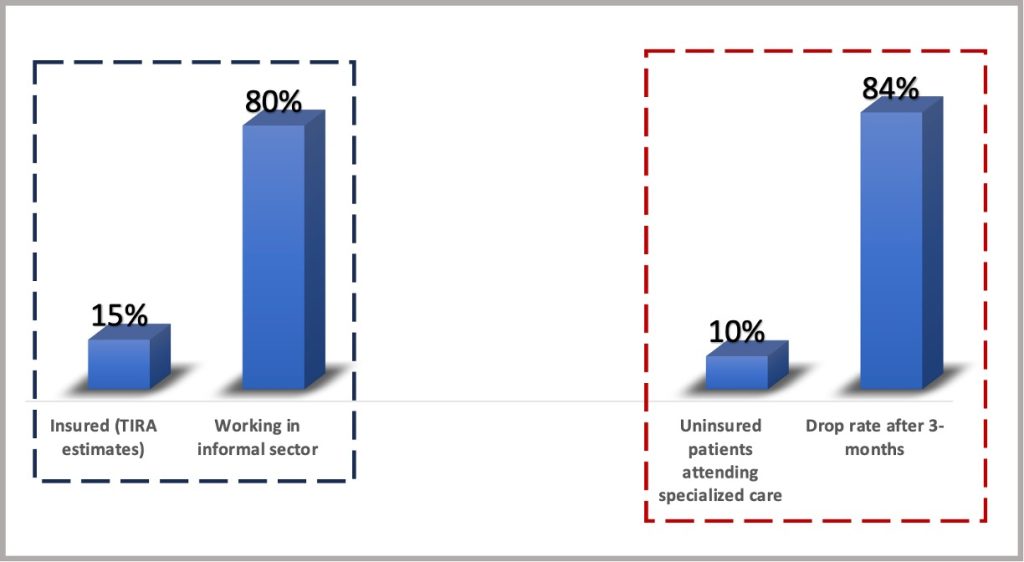
In Tanzania, only 15% of the population is covered by health insurance, while over 80% work in the informal sector, often without stable income or employment benefits. This leaves the vast majority of Tanzanians uninsured and economically vulnerable, especially when facing chronic conditions like hypertension, diabetes, and cardiovascular disease
Specialized clinics, though essential, are largely attended by insured clients, with less than 10% of patients being uninsured. Among these few, 84% drop out of care within three months, unable to afford continued consultations, investigations, or medications. This silent exodus reflects a deeper inequality where access to long-term care is shaped not by medical need, but by financial means.
Wenzetu Katika Afya (WKA) was created to confront this gap. We exist to complement national efforts in early detection, while ensuring that uninsured patients are not left behind. Through reduced consultation fees, subsidised tests and medications, WKA helps patients stay in care not just for three months, but for life.